
Understanding how muscles perform during movement has long posed a challenge in physical therapy and rehabilitation. Traditional tools like manual muscle testing inform about a single muscle’s force output while the person is in a static position. It does not provide information on muscle function during a dynamic task or on how it relates simultaneously to the function of other muscles for the coordination of a movement. Subtle deficits in functional strength, muscle balance or coordination can significantly influence movement, vulnerability to injury and recovery. Surface mechanomyography (sMMG) is revolutionizing understanding movement by offering a window into muscle function that’s objective, measurable, and captured in real time.
This non-invasive, sensor-based technology records how muscles behave during dynamic tasks—such as walking, squatting, or lifting—giving clinicians actionable insights into contraction magnitude, quality, and activation timing. These insights are invaluable for customizing care plans, adjusting interventions, tracking recovery, and ultimately improving outcomes. In this post, we will explore what sMMG is, how it works, and why it’s quickly becoming a powerful tool for personalized rehab, musculoskeletal health and performance screening.
What is Mechanomyography?
Mechanomyography is a non-invasive technique that measures the mechanical components of muscles during a contraction (Scarborough et al 2024; Linderman et al 2023; Madeleine et al 2001; Ibitoye et al 2014). Mechanomyography can be used to identify and measure physical properties such as the timing of muscle activation, duration of a contraction, and the magnitude of a muscle contraction. When these metrics are captured during dynamic activities, they provide valuable information that clinicians can not see with their eyes or easily measure. Objective data that measures muscle function can better inform clinicians during a neuromuscular evaluation, when designing rehabilitations programs, and performing wellness screens.
There are numerous technologies that measure mechanical aspects of a muscle contraction, each with its own advantages and inherent limitations. Accelerometers, lasers, electrostatic microphones, retractable transducers, piezoelectric contact sensors, and electroactive polymer sensors are all examples of technology used for mechanomyography (Scarborough et al 2024, Ibitoye et al 2014).
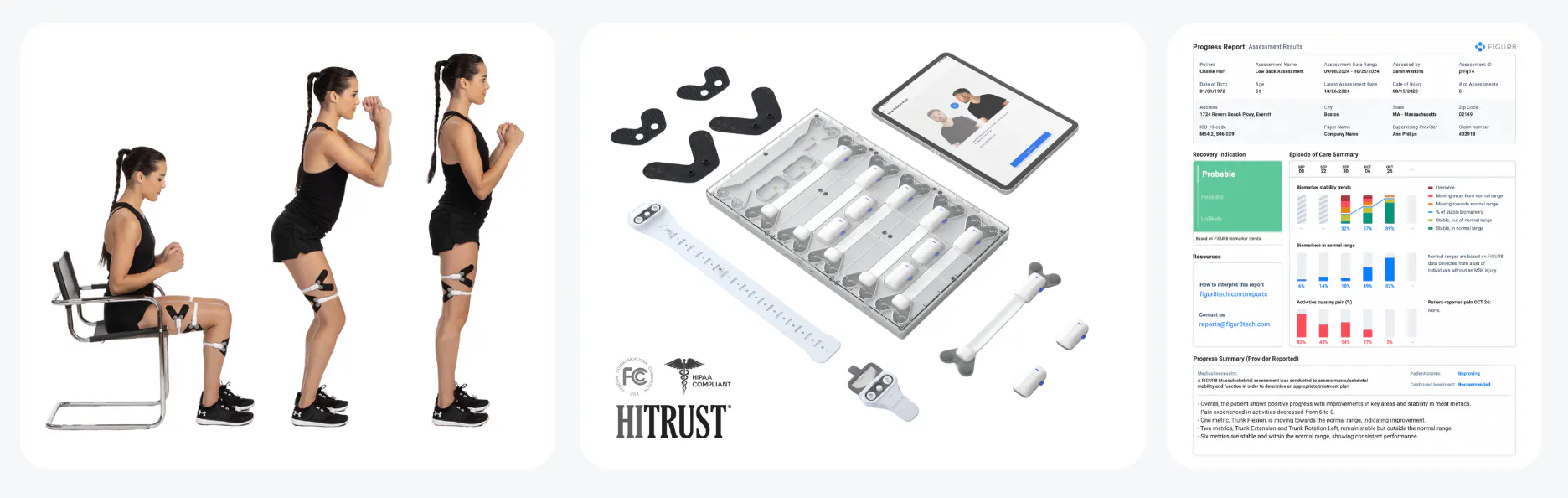
FIGUR8, Inc invented the surface Mechanomyography (sMMG), that can be worn during a variety of dynamic activities while remaining user friendly across a variety of applications (Scarborough et al 2024, Linderman et al 2023).
The FIGUR8 bioMotion Assessment Platform (bMAP)
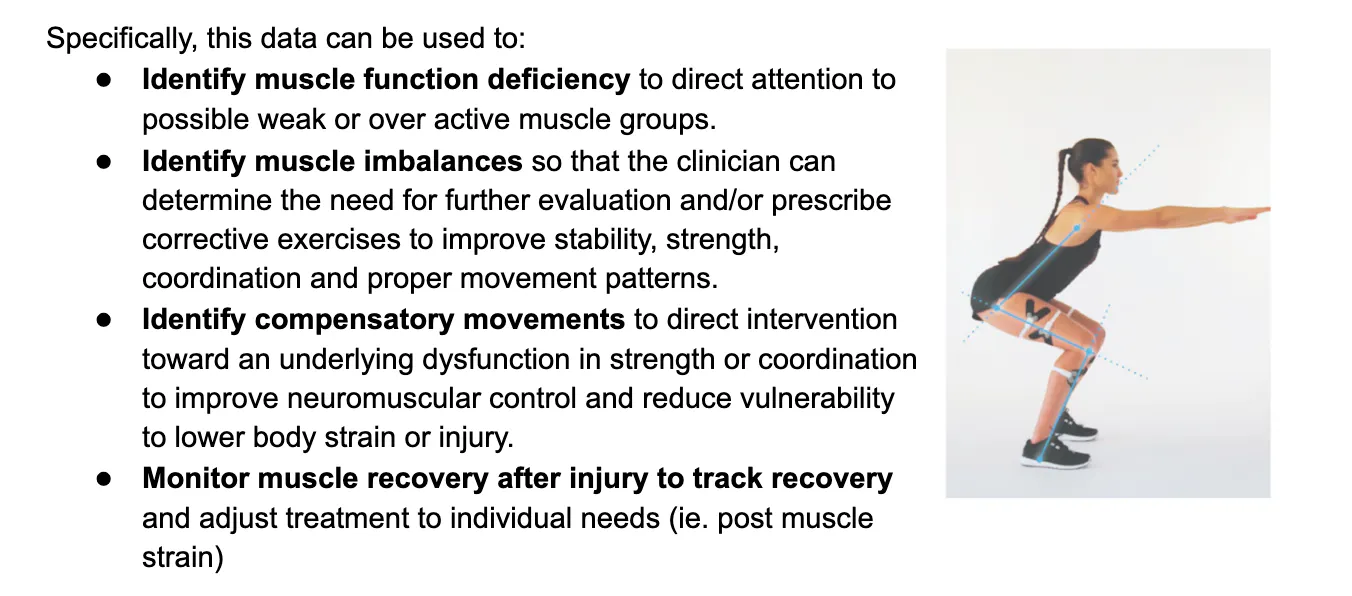
Why use FIGUR8 sMMG data?
To gain quick, objective measurable insights on how an individual moves.sMMG data helps identify deficiencies, compensations, and asymmetries that aren't always visible, guiding the clinician to target specific areas with greater accuracy. With clearer information up front, clinicians can make faster, more informed decisions and tailor interventions that lead to better outcomes.
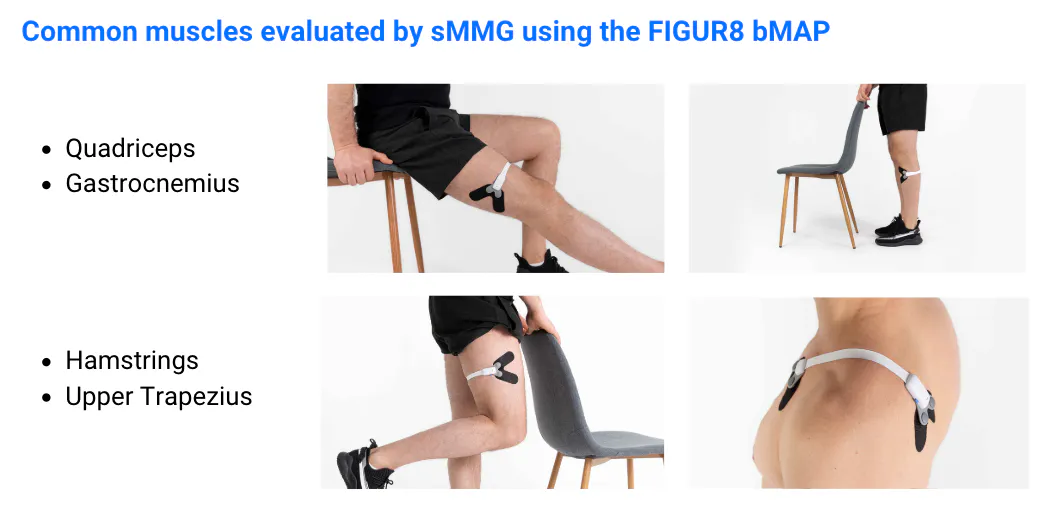
Common muscles evaluated by sMMG using the FIGUR8 bMAP:
- Quadriceps
- Gastrocnemius
- Hamstrings
- Upper Trapezius
How does the FIGUR8 sMMG work?
To understand how sMMG works, it is best to start with understanding what the sMMG measures.
So what does sMMG measure?

The FIGUR8 sMMG sensor captures the muscle contraction as depicted in the images above.
- A message from the brain is sent to bend the elbow causing
- neuronal activation of musculature (as seen with electromyography) which triggers a
- muscle contraction. The muscle expands in size and movement occurs.
- The sMMG sensor is placed across the belly of the muscle.
- The sMMG sensor expands with the surface beneath it, as the bulk of the muscle enlarges during contraction as in the example above, the biceps as it bends the elbow.
What is the difference of sMMG and sEMG?
Surface Mechanomyography (sMMG)
A sMMG sensor is:
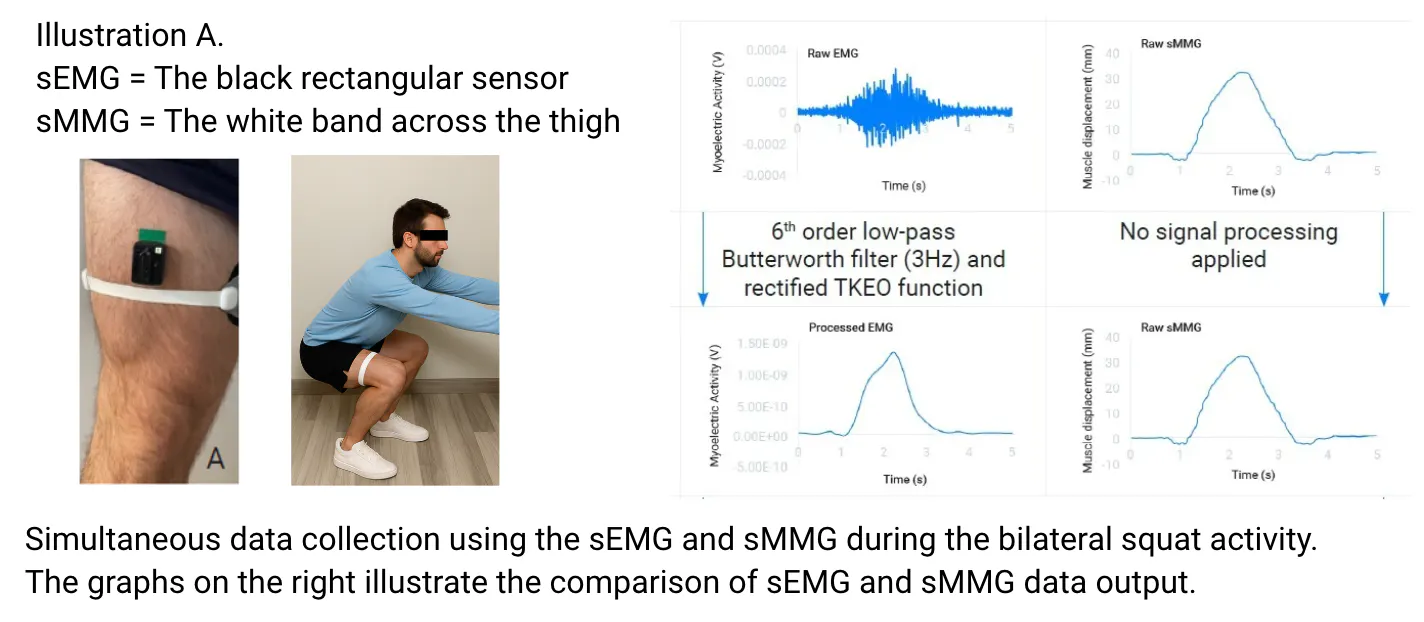
A flexible dielectric sensor that conforms to the surface beneath it and is secured either using adhesive tape or a strap. The sensor captures the mechanical properties of a muscle as the volume of the muscle mass changes during the contraction. The sMMG requires no skin prep, the sensor has very low issues with signal interference and there is no need for post signal processing.
The Magnitude of muscle output is the change in length of the sensor resulting from the expansion of the muscle belly during the contraction as it generates force needed to complete the activity (ie. bend the elbow).
The Rate of Contraction is calculated as the sensor is lengthened, telling us how quickly the contraction occurs.
- Primary clinical biomechanics metrics: magnitude of sMMG signal representing muscle function and rate of contraction.
- Secondary metric: timing of muscle activation and duration.
Primary biometrics provided from the sMMG sensor:
- Muscle Function
- Magnitude of muscle output
- Rate of Contraction
- Muscle Function symmetry
- Comparison of right and left muscle function metrics
- Muscle Balance
- Relationship of Magnitude of agonist and antagonist muscle function (ie. Quadriceps to Hamstrings muscle function)
Surface Electromyography (sEMG)
A sEMG sensor is :
An electrode that is secured with an adhesive directly to the skin above the muscle of interest to capture the electrical signal created during muscle activation (Illustration A.) (Basmajian and De Luca 1985).
The challenge of skin prep time, signal interference during data collection, post collection signal processing and relatively high cost limits application of sEMG in the majority of clinical settings.
- Primary clinical biomechanics metric: timing of muscle activation and duration.
- Secondary metric: magnitude of sEMG signal representing muscle function.
Clinical Synthesis of Lab-Grad Biomechanical Data
Below is an example of how data from a patient with chronic left knee pain may be synthesized and interpreted.
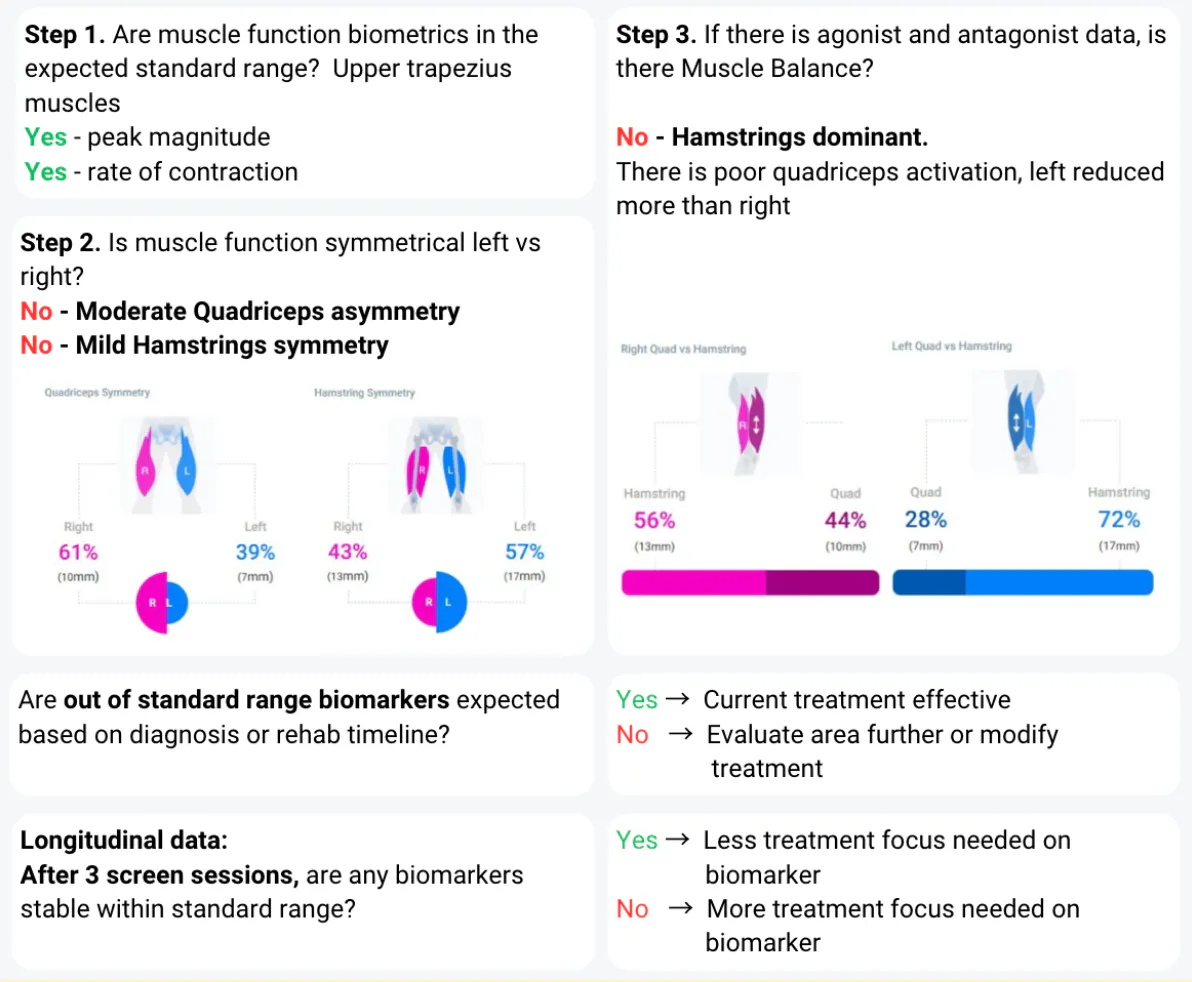
There is a shift from the range of expected standard Quadriceps to Hamstrings ratio to Hamstring dominance ratio on the left more than right. This finding suggests treatment focus on quad activation exercises and assessment of hip joint and hip musculature due to the compensation movement pattern.
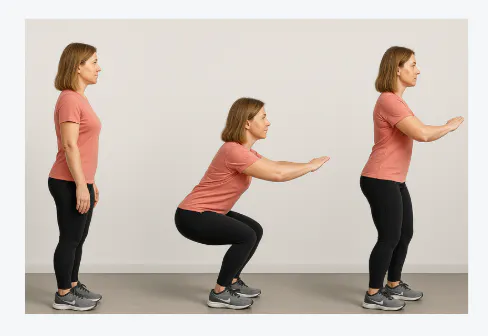
The illustration below represents the bilateral squat activity which was performed by the patient described above.
The Future of Personalized Care Using Biometric Motion Data
We're entering a new era of rehabilitation—one where care is tailored, responsive, and data-driven. With biomechanics platforms implementing sensors like the FIGUR8 surface mechanomyography (sMMG) for advanced motion capture, we are no longer guessing at how individuals move—we're measuring it. This objective insight empowers clinicians to make smarter decisions at every stage, from injury prevention and early intervention to progress tracking and performance optimization. It’s not just about treating symptoms anymore—it's about truly understanding how each individual moves, and using that knowledge to unlock better, faster, more personalized recovery.
By capturing objective dynamic joint motion and muscle function data, clinicians and care teams can make more informed decisions, whether enhancing injury prevention strategies, optimizing rehabilitation, or improving athletic performance.
Interested in learning more about sMMG technology and the future of musculoskeletal care?
Connect with the team at FIGUR8, info@figur8tech.com
References
- Scarborough DM, Linderman SE, Aspenleiter R, Berkson EM. Quantifying muscle contraction with a conductive electroactive polymer sensor: introduction to a novel surface mechanomyography device. Int Biomech. 2023 Dec;10(1):1-10. doi: 10.1080/23335432.2024.2319068.
- Linderman SE, Scarborough DM, Aspenleiter R, Stein HS, Berkson EM. Assessing Quadriceps Muscle Contraction Using a Novel Surface Mechanomyography Sensor during Two Neuromuscular Control Screening Tasks. Sensors (Basel). 2023 Jun 29;23(13):6031. doi: 10.3390/s23136031.
- Madeleine P, Ge HY, Jaskólska A, Farina D, Jaskólski A, Arendt-Nielsen L. Spectral moments of mechanomyographic signals recorded with accelerometer and microphone during sustained fatiguing contractions. Med Biol Eng Comput. 2006 Apr;44(4):290-7. doi: 10.1007/s11517-006-0036-2.
- Ibitoye MO, Hamzaid NA, Zuniga JM, Wahab AKA. Mechanomyography and muscle function assessment: A review of current state and prospects. Clinical Biomechanics, 2014;29(6), 691 - 704. doi.org/10.1016/j.clinbiomech.2014.04.003
- Basmajian, J.V.; De Luca, C.J. Muscles Alive: Their Functions Revealed by Electromyography, 5th ed.; Williams & Wilkins: Baltimore, MD, USA, 1985; ISBN 068300414X.
- Delsys. Technical Note 101: EMG Sensor Placement. Available online: https://www.delsys.com/downloads/TECHNICALNOTE/101-emg-sensor-placement.pdf (accessed on 30 December 2020).
![[object Object]](https://images.prismic.io/figur8tech/Ziu0r93JpQ5PTNEU_FIGUR8-whiplash-output.png?auto=format,compress)
![[object Object]](https://images.prismic.io/figur8tech/aMxfvGGNHVfTPYNl_Screenshot2025-09-18at1.47.45PM.png?auto=format,compress)