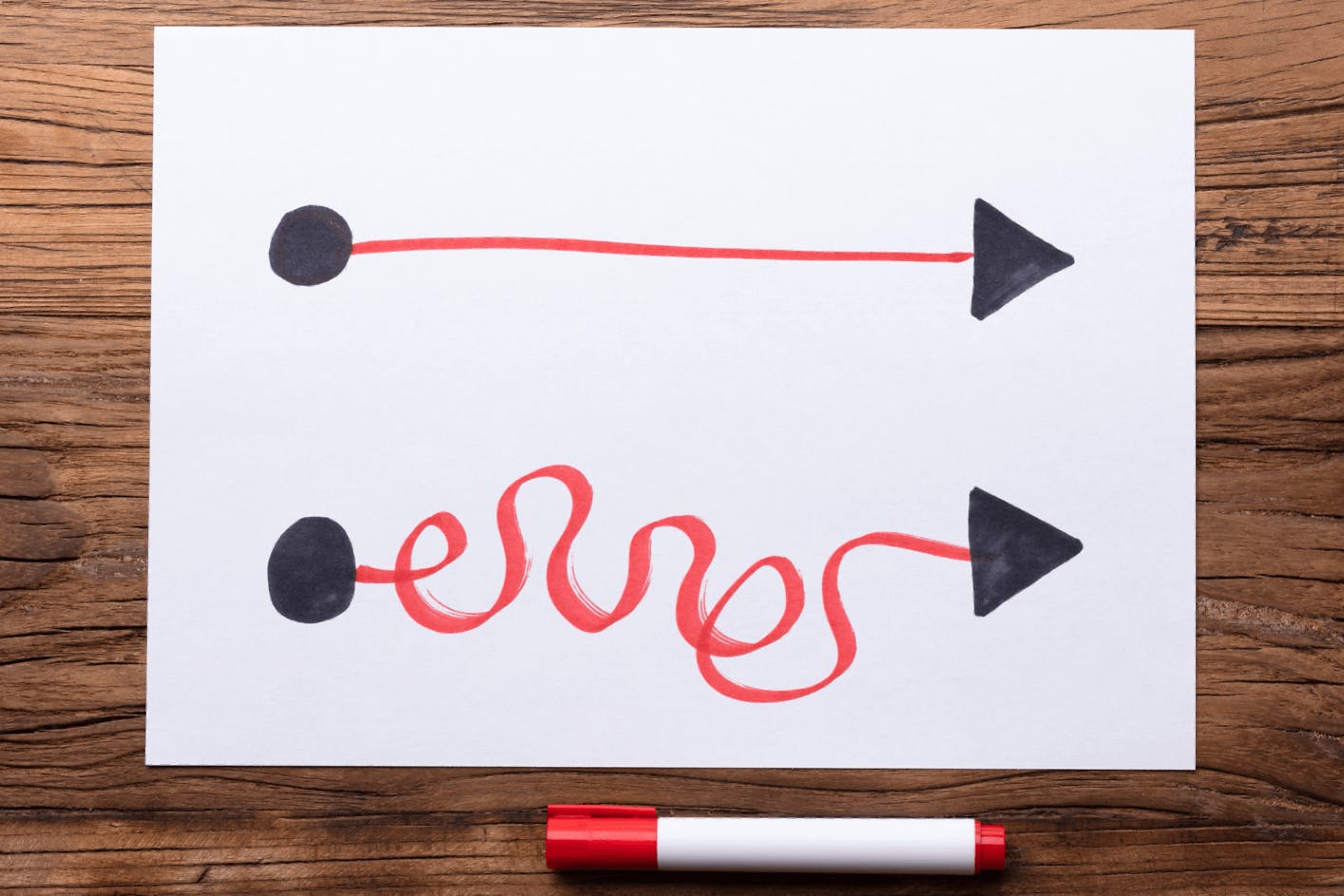
Taken from Aeromith’s seminal 90s album “Get a Grip”, this same quote could be applied to the rehabilitation journey of many individuals recovering from a musculoskeletal injury. In my past life as a physical therapist, I had countless patients arrive at their appointments and share that today “[they] just feel weaker” or “[their insert area of the body here] just feels less stable” and the tools that I had at my disposal ranged from asking questions and getting a subjective response as to why they felt this way, or just as rudimentary, using manual muscle tests to determine, if in fact, there was a change in their strength. Looking at the table below, which shows the scoring rubric for manual muscle tests, you’ll understand my challenge.
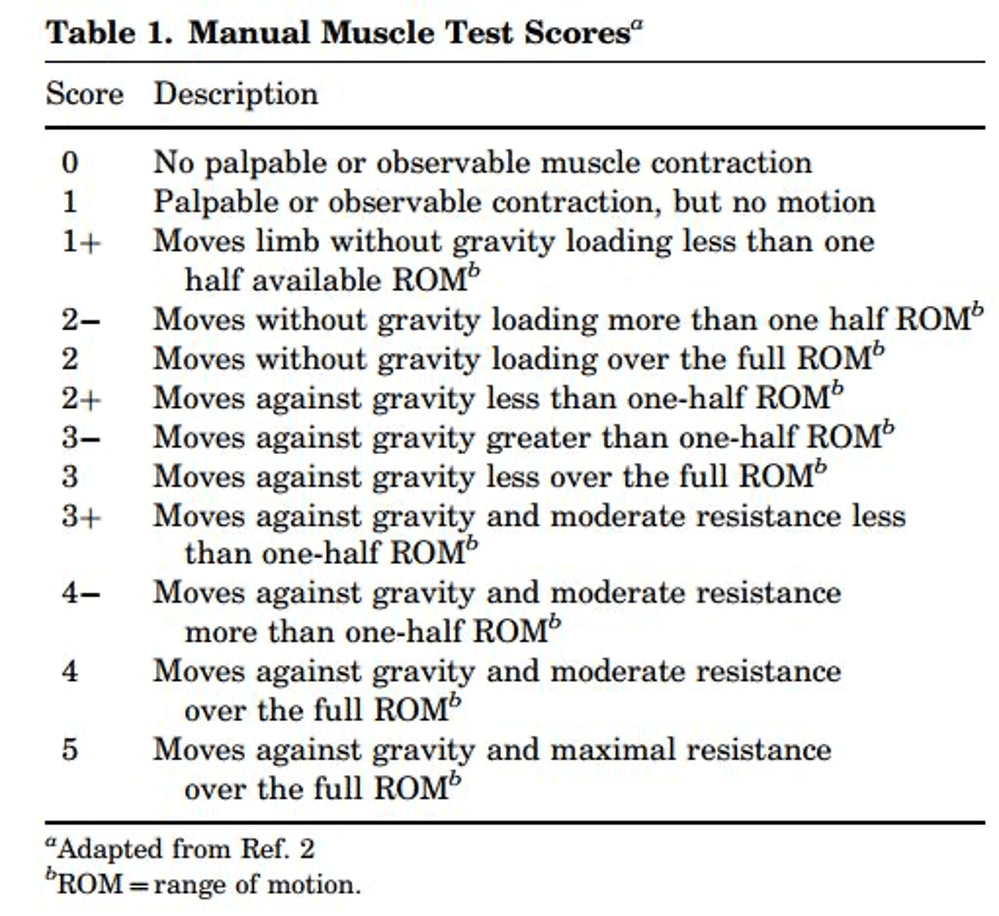
One of FIGUR8’s clinical partners, Dan McGovern, recently shared that a patient of his experienced a setback in their rehabilitation. What was different this time was that Dan was able to use the FIGUR8 platform to bring data into the conversation and support the subjective complaints of increased pain and weakness that his patient shared with him.
FIGUR8’s solution is the data standard for musculoskeletal health and provides insights never before available at the point-of-care to increase trust and confidence in decisions. Rather than utilizing blunt measures of strength like manual muscle testing, Dan was able to capture dynamic muscle health data during functional activities to understand his patient’s current situation and make the necessary changes to their treatment plan to get them back on track.
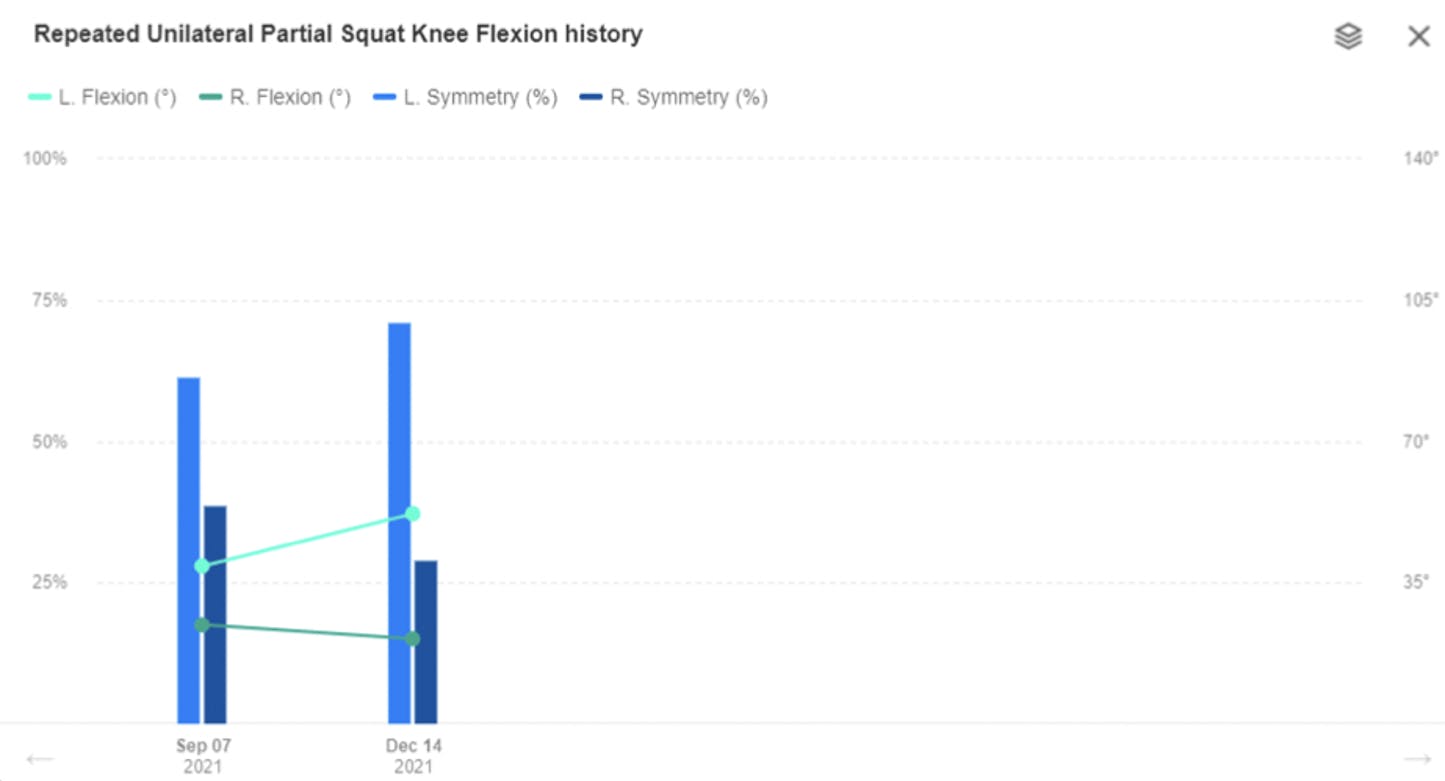
Looking at the results above, which capture knee flexion and symmetry of the quadriceps muscle during a one-legged squat, clearly shows that while knee flexion on the left (light green line) has improved over time, knee flexion on the right (dark green line) has regressed from the initial assessment. Similarly, we see a widening gap in the symmetry of the left and right quadriceps muscles.

Diving deeper into the FIGUR8 data reveals even more of the challenge. The visual on the left above shows a smooth and coordinated movement with excellent control as the patient completes 5 repetitions of the movement, represented by each “hump” on the colored line, Also the muscle is able to sustain this control and does not demonstrate any fatigue throughout 3 trials of the task, represented by the different coloured lines.
Contrast this with the visual on the right, where within each trial there are challenges with muscle strength and control, evident in the inconsistent shape of each “hump” as well as the “spiky” nature of the line, showing fasciculation or flickers of the muscle as it works to maintain its contractile strength. Similarly, there is inconsistency between each trial as the muscle fatigues and can no longer sustain the tension necessary to complete the task.
Progress during rehabilitation isn’t always a straight line, and that’s ok. What can be frustrating is not understanding why. FIGUR8 removes that uncertainty and gives patients and providers transparency into the rehabilitation process with data and insights that can guide and increase confidence in treatment decision making
If you would like to learn more about how data-driven decision making can improve the care that you deliver to your patients, reach out to our team at info@figur8tech.com and request a demo..
![[object Object]](https://images.prismic.io/figur8tech/Zovpqx5LeNNTw5zJ_Depositphotos_437789926_L.jpg?auto=format,compress)
![[object Object]](https://images.prismic.io/figur8tech/fb70cc79-bce7-401d-b520-f64481a57f15_Depositphotos_174412362_XL-min.jpg?auto=compress,format)
![[object Object]](https://images.prismic.io/figur8tech/ZpjFqh5LeNNTxQaz_unnamed.jpg?auto=format,compress)
![[object Object]](https://images.prismic.io/figur8tech/ZovljB5LeNNTw5wp_Depositphotos_360381548_L.jpg?auto=format,compress)
![[object Object]](https://images.prismic.io/figur8tech/ZiuNiPPdc1huK3Z8_hitrust.png?auto=format,compress)
![[object Object]](https://images.prismic.io/figur8tech/Ziuzo93JpQ5PTNBh_IMG_9695.jpeg?auto=format,compress)
![[object Object]](https://images.prismic.io/figur8tech/ZiucmPPdc1huK3fe_biomotion-sciences-3.png?auto=format,compress)
![[object Object]](https://images.prismic.io/figur8tech/Ziutqt3JpQ5PTM57_Picture1-cover.png?auto=format,compress)
![[object Object]](https://images.prismic.io/figur8tech/ZiuxMt3JpQ5PTM87_Oberlander.jpg?auto=format,compress)
![[object Object]](https://images.prismic.io/figur8tech/ZiulKPPdc1huK3ky_ACL-1.jpg?auto=format,compress)
![[object Object]](https://images.prismic.io/figur8tech/ZiupUvPdc1huK3oT_Back_Picture1_Cover.png?auto=format,compress)
![[object Object]](https://images.prismic.io/figur8tech/ZiunSPPdc1huK3lz_run-1001.jpg?auto=format,compress)
![[object Object]](https://images.prismic.io/figur8tech/ZvMBMrVsGrYSv25U_unnamed.jpg?auto=format,compress)